
Last year, 6,000 Idahoans signed the Senate Joint Memorial 101 (SJM 101) petition to “Keep Idaho Water.” SJM 101 aims to evaluate and expand Idaho’s long-term water storage capacity – including thorough studies of the potential reconstruction of the Teton Dam.

During the 2025 legislative session, Idaho State Sen. Van Burtenshaw, District 31, secured $30 million in ongoing state funding for water infrastructure investment.
“That sounds good on a wet year, and it becomes very precedent setting on a dry year,” says Zak Miller, Idaho Farm Bureau Federation. “With water, it’s always just cessation of fighting; it's never the end of a battle.”
Miller contends that Idaho has all the water it needs on a given year; yet, we lack the resources to keep and put it to beneficial use within Idaho’s borders. We have limited storage capacity in our reservoir system and limited aquifer recharge sites.
His solution: “Follow the money. Where is the biggest bang for the buck?”
Sen. Kevin Cook, District 32, believes he has a pretty good answer, citing the fact that 1.4 million to 2 million acre-feet of Idaho’s water spills into the ocean in a given year.
Remembering, rebuilding anyway
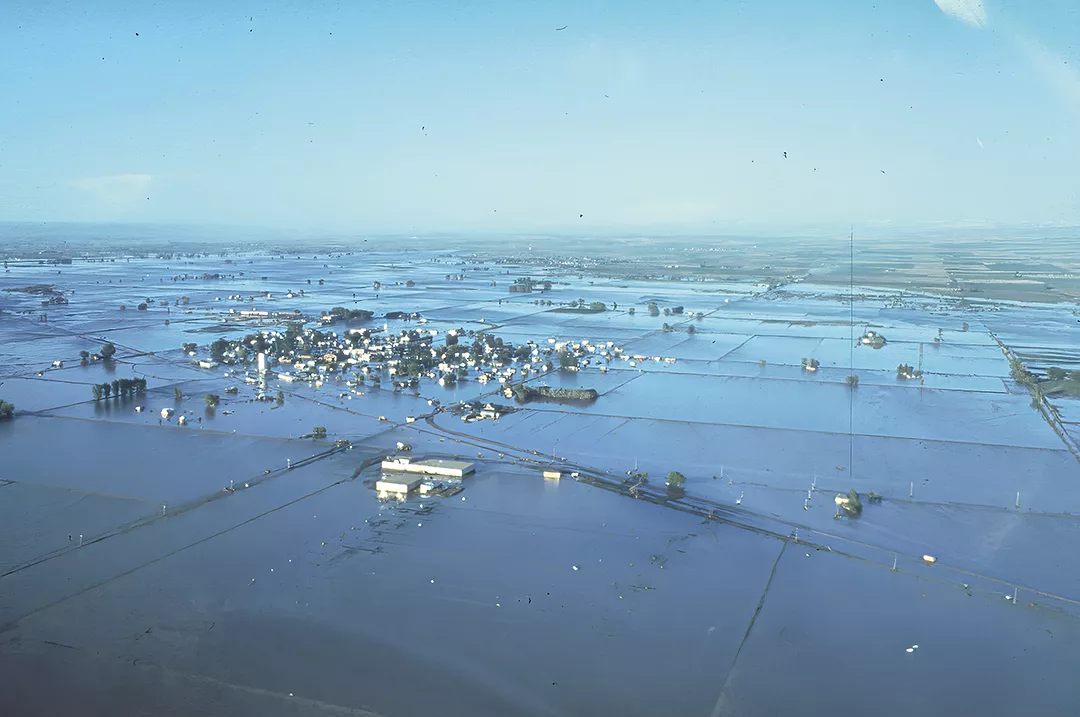
Ask any Upper Valley native resident older than 55, and they’ll most likely have a crystal-clear memory of June 5, 1976 – the day the Teton Dam collapsed. Despite that tragic day, according to Cook, most of those residents supported building the dam then and still support it today.
“I’ve probably met maybe 10 people that are against building the dam,” notes Cook. “One of them said, ‘You build the dam, and the next thing you’ll do is take our guns away from us.’
“I couldn't make that stretch,” laughs Cook.
Some citizens are against federal money coming into Idaho. A few others have post-traumatic stress syndrome related to the disaster, not necessarily the dam, admits Cook.
But the majority of the people Cook has spoken with are supportive – some despite their heartbreaking memories.
Two years ago, Cook texted all the southeastern Idaho legislators to ask whether they would support SJM 101. Everyone responded, “Yes.” However, District 31 Rep. Jerald Raymond was slow to respond. When he finally did, his text read:
“I remember the Teton Dam. I helped my father pull dead cows out of the tops of the trees.”
Cook’s heart sank. “I thought, ‘Oh my gosh, I’ve offended him. I’ve lost one of my best friends.’” But he kept reading. At the end of the text, Raymond concluded, “I am 110 percent on board for this. We need to build the Teton Dam!”
Rexburg Mayor Jerry Merrill says the need for the dam was valid 50 years ago and is even stronger today.
“We need more water storage. We need flood control. We need power generation. We need more room for recreation,” he states.
Merrill wants to see a design done that will give the people of Rexburg and Madison County the comfort and security that it will be built right and be solid.
“We needed this done yesterday,” he quips.
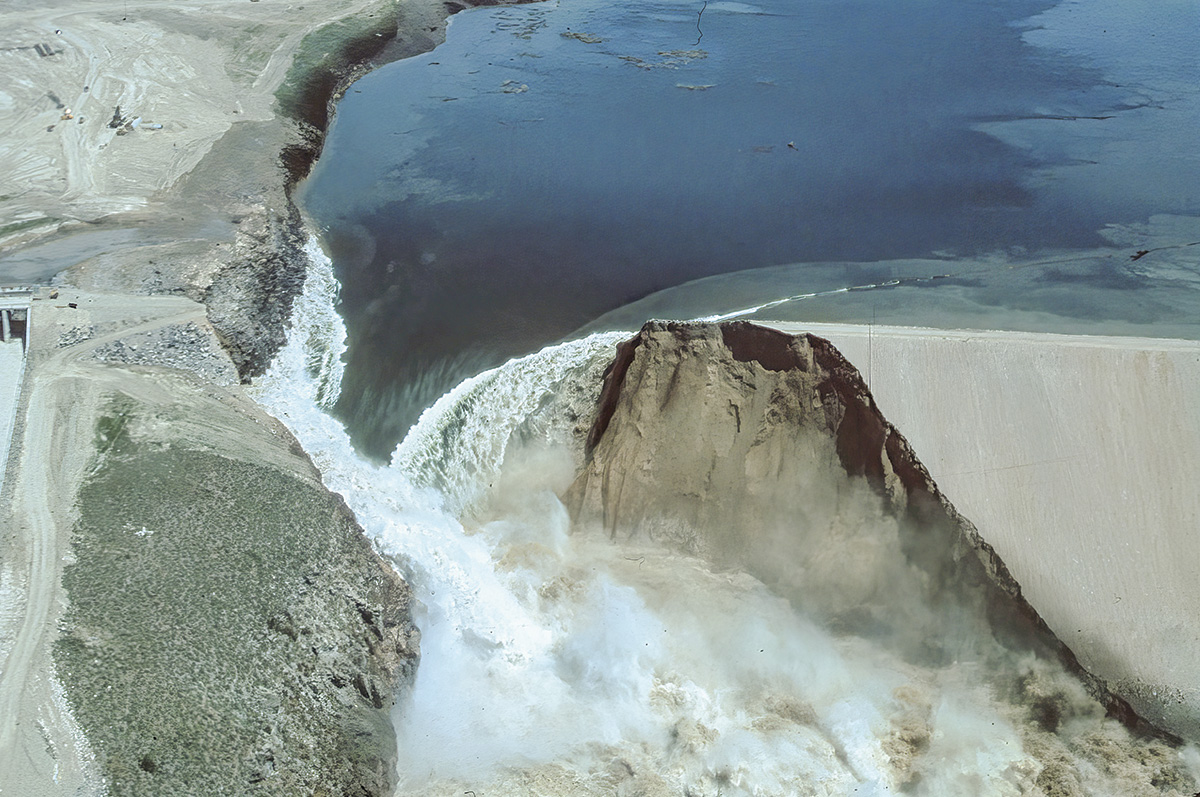
This is a photo of the Teton Dam after the right side of the dam broke, allowing the water to go crashing into the valley, June 5, 1976. Image courtesy of BYU – Idaho.
Environmental and political concerns
As Cook pushed the concept harder, he received plenty of warnings from “concerned parties” that the environmentalists would eat it alive. Without waiting, he approached three prominent environmentalist groups in Idaho and asked them how they felt about rebuilding the Teton Dam. Their responses were congruent: First, Idaho needs to take action. Second, we are not opposed to dams; do the study, get the numbers and prove that a dam is the best solution for Idaho. If so, we will support it.
At the January meetings of the Idaho Water Users Association (IWUA) in Boise, Brian Patton, deputy director for the Idaho Department of Water Resources, said there are multiple Upper Snake River Basin studies currently conducted by state and federal agencies into alternatives of a Teton Dam rebuild that can boost additional storage for the state.
In a joint presentation with Mike Hilliard of the U.S. Bureau of Reclamation, and Brandon Hoffner, executive director for the Henry's Fork Foundation, Patton highlighted storage projects that include the Island Park Dam increase, a raise of Ashton Dam's capacity, increasing canal piping in the North Fremont Region, raising capacity at Minidoka Dam in the Magic Valley and several others.
Patton knows the discussion of Teton Dam and the efforts of Cook and others to make it happen have been debated for years. But he knows the political challenges and cost concerns for rebuilding Teton Dam could be significant.
“I think from the [Idaho] Water [Resource] Board side, they definitely support new water storage and the potential for new water storage in the Upper Snake,” Patton said. “But I do think that they’re a little cautious, because they’ve been through the Teton game a couple of times and realize that Teton is already a heavy lift to roll uphill. There might be other lifts that are somewhat easier. If we focused our effort on those easier lifts, we might accomplish something rather than throwing all our weight behind the Teton [rebuild]. That’s going to be much, much harder to accomplish.
“If you forced me to say which one I do think could actually move forward, it would be the raising of Minidoka [Dam]. I think that’s going to be the easiest lift out of all the options.”
Watery red tape
Building a dam isn’t a project that can be hefted by the state. The federal government will have to take on the responsibility, which means lots of red tape. But that’s something that Cook is prepared for.
In his research, Cook has found that the Bureau of Reclamation's order to build a dam on the Teton River is still in effect. The bureau still owns the land where the current site is located and where the reservoir would be filled. The bureau issued a report in the mid-90s admitting that if the original dam had been built using all available technology in 1976, it would have held. They just opted not to use all of the available technology.
Cook is confident that with today’s technology, a sturdy dam can be built in the Teton River Canyon. He estimates the cost will be close to $1 billion; that money will have to come from Congress. All signs indicate, however, that he’s got the support he needs from Idaho’s Washington, D.C., delegation.
U.S. Rep. Mike Simpson says, “There isn’t a problem in Idaho that can’t be solved with a really good water year.”
According to Simpson, he’s been working in Congress to secure more federal funding for Idaho’s aquifer recharge projects, and he’s willing to work for more storage options, as well.
“We need to recharge the aquifer,” he says. “We’ve been doing work in Congress to give them the resources to do that and authority to use the Army Corps of Engineers canals. When looking at additional storage, I’m not the water expert; the state legislature will make that decision. When they make those decisions, I’m more than happy to support them with whatever resources we can find to do it.”
Ultimately, Cook says he’s pushing to rebuild the Teton Dam because it will benefit all of Idaho and help avert a water shortage disaster down the road.
“I love a steak. I love a good baked potato, a cold glass of water and occasionally a long, hot shower. And all of those require water. I love Idaho, and I'm not willing to give it up,” he smiles.
Ag Proud – Idaho Editor David Cooper contributed to this report.
.webp?t=1687979285&width=640)